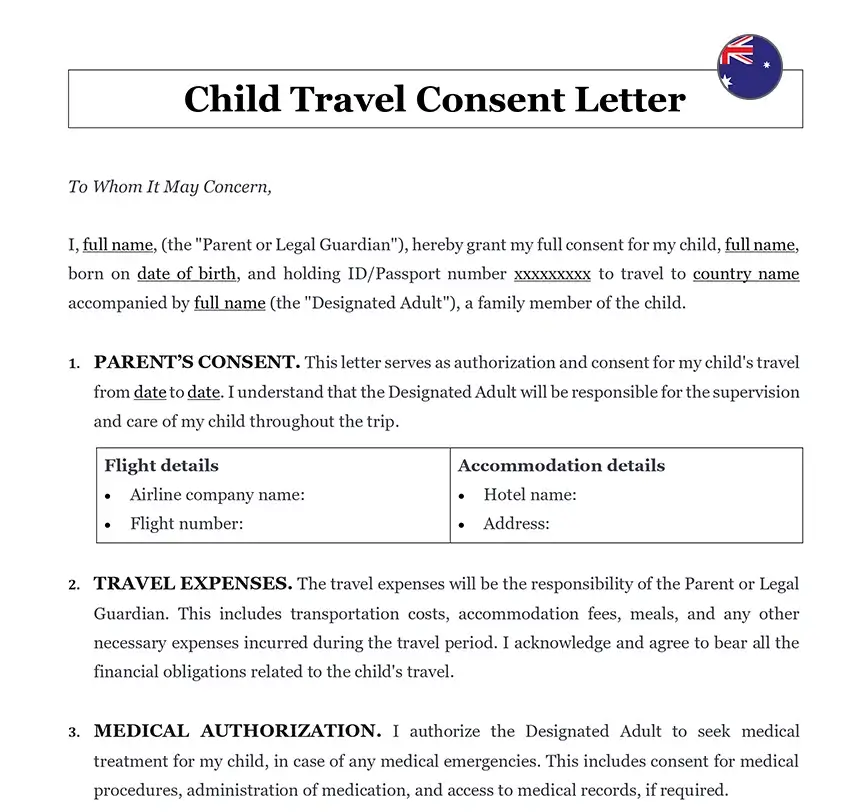
Traveling abroad with minors from Australia requires careful planning, especially when it comes to legal documentation like a Child Travel Consent form.
Make a professional Child Travel Consent drafted by lawyers.
Understanding the Importance of a Child Travel Consent
When traveling internationally with a minor, a Child Travel Consent is a crucial document. This consent form is especially important if the child is traveling with one parent, a relative, or a guardian, rather than both parents.
1. Legal Requirement: Many countries require a Child Travel Consent to prevent child abduction and ensure that the child has permission from both parents or legal guardians to travel.
2. Avoiding Delays: Having this document can help avoid delays or complications at immigration checkpoints, as officials may request to see proof of parental consent.
When is a Child Travel Consent Necessary?
A Child Travel Consent is needed in various situations, particularly when one parent is not accompanying the child on an international trip. It is also required when minors travel with relatives, friends, or as part of a group such as a sports team or school trip.
In cases where parents are divorced or separated, a Child Travel Consent ensures that the non-traveling parent is aware of and agrees to the trip. This document is also recommended when a minor travels with only one parent, as it proves the other parent’s consent.
Preparing a Child Travel Consent Form
Preparing a Child Travel Consent form involves including specific details to ensure its validity and acceptance by authorities.
➤ Child’s Information: Full name, date of birth, and passport details.
➤ Travel Itinerary: Destinations, dates of travel, and return plans.
➤ Accompanying Adult’s Information: Full name, relationship to the child, and passport details of the person traveling with the child.
➤ Parental Consent: Signatures of both parents or legal guardians, along with their contact information.
➤ Notarization: While not always required, notarizing the consent form adds an extra layer of authenticity and is strongly recommended.
One of the most significant legal considerations is whether the intern should be paid. If the intern is doing work that an employee would typically do, they are entitled to the national minimum wage. Here’s what you need to know:
1. Vocational Placements: Typically unpaid if part of a course requirement.
2. Non-Vocational Internships: Should be paid if the intern contributes to the business.
3. Minimum Wage Compliance: Ensure that if payment is required, it meets or exceeds the legal minimum wage.
Non-compliance with these laws can lead to severe penalties, including fines and reputational damage. This requirement is as vital as ensuring proper payment terms in a Service Agreement.
ℹ️ This document acts as a formal agreement between the intern and the organization, ensuring that both parties are on the same page. Its importance is akin to that of an Employment Contract.
Addressing Insurance and Liability
When inviting interns, it’s essential to ensure they are covered by appropriate insurance. This includes:
1. Workers’ Compensation: Interns should be covered in case of work-related injuries.
2. Public Liability Insurance: Protects against claims from third parties.
3. Professional Indemnity Insurance: For roles where the intern might give advice or make decisions.
Providing this coverage is not only a legal requirement but also demonstrates your organization’s commitment to a safe and supportive working environment.
Confidentiality and Intellectual Property Clauses
Interns often have access to sensitive company information or may work on projects that generate intellectual property (IP). To protect your business interests, the Internship Invitation Letter should include:
1. Confidentiality Clauses: To ensure that any proprietary information remains secure.
2. Intellectual Property Clauses: To clarify that any IP created during the internship belongs to the company.
3. Non-Disclosure Agreements (NDAs): For situations where the intern might access highly confidential information.
Providing Supervision and Mentorship
Interns require guidance to gain valuable experience and contribute effectively to your organization. Legally, it’s important to:
1. Assign a Supervisor: Someone who is responsible for guiding and evaluating the intern.
2. Set Clear Objectives: Define what the intern should learn and achieve during their time with you.
3. Regular Feedback Sessions: Schedule regular check-ins to discuss progress and address any issues.
Providing adequate supervision not only enhances the intern’s experience but also ensures that their work meets your organization’s standards.
Work Health and Safety Compliance
Interns are entitled to a safe working environment under Australian work health and safety laws. Employers must ensure that interns are trained in workplace safety protocols and are aware of their rights and responsibilities regarding health and safety. This includes providing a safe workspace, necessary safety equipment, and training on emergency procedures. These requirements are as important as those for full-time employees, similar to the considerations outlined in a Workplace Health and Safety Policy.
Adherence to Anti-Discrimination Laws
Interns in Australia are protected under anti-discrimination laws, which means they must be treated fairly throughout the internship process. This includes:
➤ Fair Selection Process: Ensure that the intern selection is free from bias based on age, gender, race, disability, etc.
➤ Equal Opportunities: Provide equal access to learning opportunities and resources.
➤ Respectful Work Environment: Promote a workplace culture that values diversity and inclusion.
Procedures for Termination and Conclusion
The Internship Invitation Letter should outline the conditions under which the internship may be terminated by either party. It should also specify what the intern can expect at the conclusion of the internship, such as a certificate of completion, reference letter, or feedback session. Properly managing the end of the internship is as important as handling the termination of an employment contract, where clear communication and documentation are key.
Record-Keeping and Documentation
Keeping detailed records of the internship process is essential for legal compliance and future reference. Important documents to maintain include:
1. Internship Invitation Letter: The initial agreement outlining the terms.
2. Performance Evaluations: Records of the intern’s progress and feedback.
3. Termination Letters: If applicable, documentation of how and why the internship was terminated.
These records are vital for legal protection and can be useful if you plan to offer the intern a permanent role in the future. Proper documentation is as critical as maintaining comprehensive Employee Records throughout their employment.
Ask your question and receive legal advice from a qualified lawyer



 Word Document (.docx)